Margin marks
4 human-approved annotations, anchored to the article text.
On election night in 2016, my partner and I were living in a 550-square-foot, one-bedroom apartment in Dillon Valley. We watched the results come in, mostly in stunned silence. As I remember it, I was at my computer, working with election coverage on in the background. Lindsey sat cross-legged, eyes-wide, her hands cupped over her mouth, in front of the television. Until she just couldn't take any more. Then she announced she was going to bed.
I stayed up. Editing maybe, it would be typical to bury my disgust in something I could finish. There was work to do, I and I knew how to do it, so I kept going.
Around 11 I think, I heard her get out of bed. She came into the living room, stood behind me, and started sobbing.
I tried to comfort her. Nothing I could say would change what was happening. There is a particular helplessness in watching someone you love suffer while discovering just how little comfort you can provide. You would do something if you could. You can't think of what that something might be.
I understood more of the betrayal later. I won't pretend to know everything she was feeling. But I know what the country had just done.
We had elected a leering bully and demagogue whose contempt for women was part of the attraction. He gave an entire movement permission to indulge its own cruelty and call it strength. Millions of Americans gave him power, then went home to the women in their lives.
I keep thinking about the ordinary life waiting on the other side of that vote. Sharing a kitchen, a bed, a life with someone whose dignity half of the country decided was negotiable.
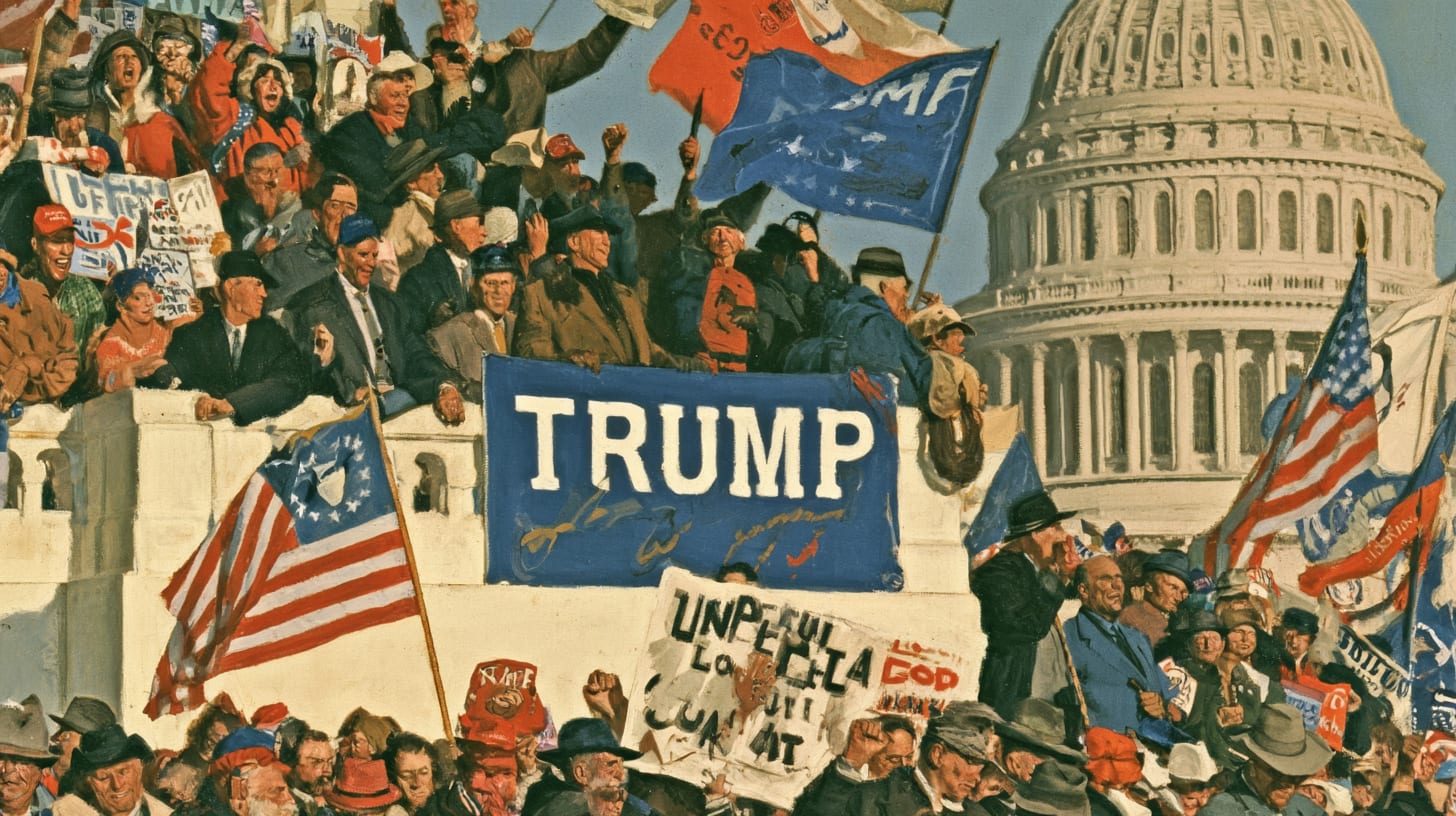
MAGA's racism and misogyny are central to its appeal. This is a proto-fascist movement that carnivalizes the spectacle of putting people in their place. The humiliation is part of the promise. And the damage reaches into families, friendships, workplaces, all the ordinary arrangements in which human cooperation and mutual respect are essential.
What was the prompt?
MAGA's racism and misogyny are central to its appeal. This is a proto-fascist movement that carnivalizes the spectacle of putting people in their place. The humiliation is part of the promise. And the damage reaches into families, friendships, workplaces, all the ordinary arrangements in which human cooperation and mutual respect are essential.
In our little apartment, election night was a night to forget. But you don't really forget.
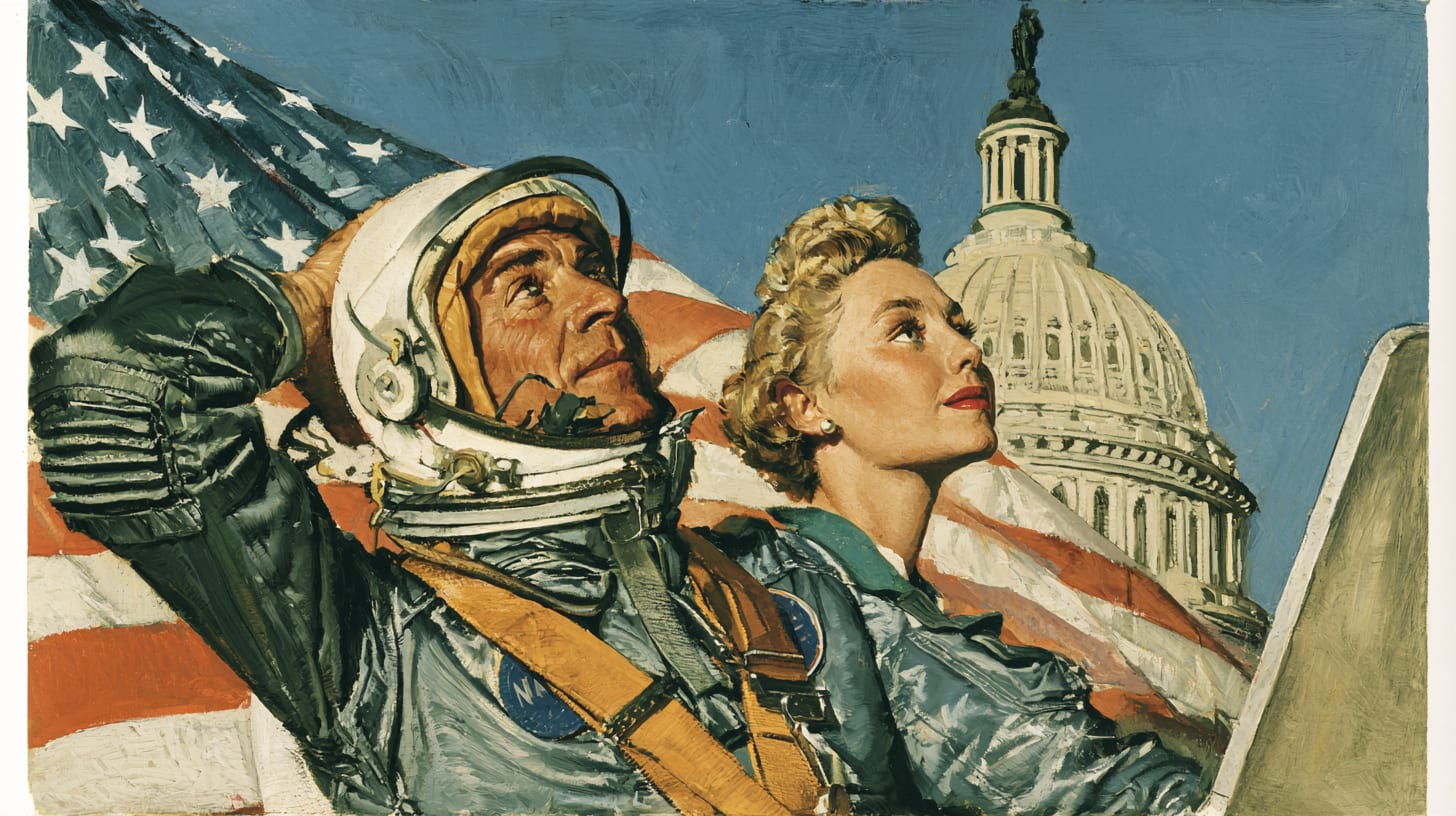
SMASH CUT TO - ELECTION NIGHT, 2026: Ten years later, having achieved self-actualization and work-life balance, I was at my computer again. The freaks had long since stormed the Capitol, Bad Bunny played the halftime show at Super Bowl LX, and William Shatner actually went to space.
Lindsey was knitting and following the results on the New York Times app. The knitting is a recently revived passion. The intensity suggested she had unfinished business. Hats off to the Times. The app is an impressive technical achievement, regardless of what it does to your nervous system.
This time the ass-kicking became apparent quickly. We found ourselves in stunned silence again, trying to absorb results that kept exceeding what we had allowed ourselves to expect. Democrats had won both chambers of Congress. The movement that had made cruelty into a governing identity had taken a decisive electoral beating.
"Thank God," she said (again).
I shared the relief. I had not seen her this happy in a while. But I had just slumped into my office chair after experiencing one of the worst days of my professional life.
Earlier that day, I had fired my longest-tenured employee for cause. He was someone I had considered a friend. The comments that led to his firing had been directed at female staff members - comments that I felt were intended to cause harm.
Under ordinary circumstances, he might have spent that evening celebrating the same results we were.
That contradiction is not lost. How easily a person's political identity can coexist with conduct that violates everything the identity supposedly stands for. Knowing which box to check does not settle how you treat the people around you.
I can already hear the objection from someone who would call the firing "woke."
What's the big deal? It was just a joke.
That question always seems to arrive with a settled opinion about whose discomfort matters. The person making the comment deserves context, generosity, a second interpretation. The women receiving it are supposed to acquire a sense of humor.
By the time Lindsey was knitting and saying "Thank God," I had already spent part of the day ending a working relationship with years of history behind it. I welcomed the election results. I needed the good news. And I was watching a national repudiation of something I had just confronted much closer to home, in someone whose politics should have given us common ground.
I would like to believe the country is beginning to reckon with its full-throated endorsement of this rotten movement. But the events of the day made me painfully aware of just how much reckoning lies ahead. The results give us an opening. I want to know what we intend to do with it.
I want the relief we felt to have somewhere to go. I want it to become something people can count on after the election coverage ends: more control over their work, more freedom to leave a bad situation, more opportunity to make a life that isn't organized around keeping somebody more powerful happy.
An election can put people in office who support those ambitions. Making them possible requires changing the circumstances in which people make their choices. It is difficult to stand up for yourself when losing your job would mean losing everything. It is difficult to pursue an idea when every step requires expertise you do not possess and can't afford. A great deal of what we call freedom depends on having the means to do something with it.
That is where I think something consequential may be happening with applied AI.
Here is the possibility I want you to consider: if more people can gain access to capabilities that previously required substantial money, specialized training, or an institution behind them, some of the power attached to those advantages could become harder to hoard. People could have more ways to earn, learn, build, investigate, and organize - and more choices about whose terms they have to accept.
Whether that becomes economic equality depends on who controls the tools and who keeps the value they help produce. But I have used them enough to believe there is a possibility here worth fighting for.
As for my parlor pink composure, this particular opening has arrived courtesy of an industry whose concentration of wealth and power embodies much of what I despise. I would have preferred my political hopes to come with fewer billionaire founders attached.
Instead, I find myself wanting these tools in more people's hands while wanting considerably less of our future in the hands of the companies that own them.
There is something politically consequential in being able to build an instrument suited to your needs. Every tool carries decisions about what work matters, whose time is valuable, and what people are expected to put up with. Building one gives you a chance to make those decisions yourself. You can begin deciding what the software should ask of you, what it remembers, and how much room it leaves for mistakes.
My projects don't prove that AI will redistribute wealth equitably. They do establish that the means of production can be used for some profoundly stupid shit. I am an imperfect example of the person I hope this technology can help. But I do understand that if someone with my background gets more capable while someone with fewer resources remains excluded, the gap will grow.
The environmental objections deserve more than a reassuring paragraph. Behind the software are facilities drawing enormous amounts of electricity from grids that also have to keep homes, schools, and hospitals running. The International Energy Agency reports that electricity consumption at AI-focused data centers grew by 50 percent in 2025. Accommodating that growth means decisions about what gets built, where it goes, and who pays.
What was the prompt?
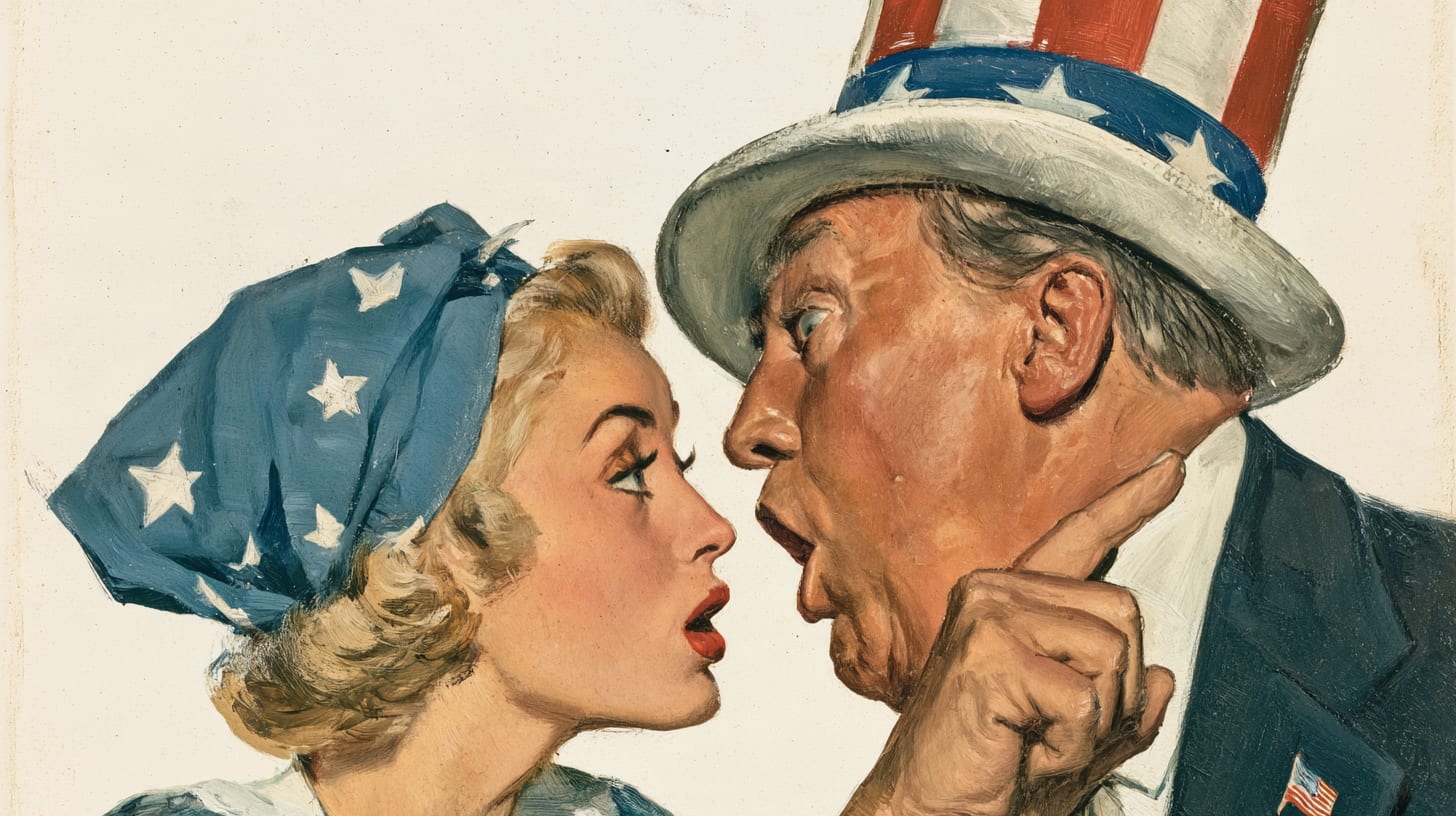
We had elected a leering bully and demagogue whose contempt for women was part of the attraction. He gave an entire movement permission to indulge its own cruelty and call it strength.
We deserve a meaningful say in what happens to our communities. We deserve enforceable commitments about costs and consequences, with someone accountable when the promises fail. If I am going to argue that this technology could give ordinary people more control over their lives, I have to take seriously the people who fear losing control over theirs to accommodate it. My enthusiasm for what I can build does not entitle me to decide what they should have to live with.
This is where my politics make demands of my enthusiasm. If I believe the tools could distribute capability more widely, then I have to care about access, dependence, and who captures the benefits. I have to be willing to discover that a particular application makes those problems worse. "I built something cool" cannot carry an entire theory of social progress.
The election gives me hope that there is room to demand something better: workplaces where women do not have to absorb contempt as a condition of employment; communities with a meaningful say in what gets built around them; technology that gives people more control over their work and more of its rewards. None of that follows from a blue map. People have to make it happen.
When I talk about giving people more capability, more independence, more power over the conditions of their lives, I have to include what exercising that power asks of them. Useful tools can help us investigate a problem, build an alternative, or make a decision better informed. As people use those capabilities to meet one another's needs, individual independence can grow into something more durable: mutual aid.
This is what I want to carry out of this election: some willingness to follow our convictions into the places where they cost us something. Into our friendships and workplaces. Into decisions about the tools we build, the companies we enrich, and the communities we ask to bear the consequences. I want more people to have the means to make those decisions, and fewer people forced to live at the mercy of them.
All said, we made a shiny new memory on Tuesday, November 3rd, 2026. We found some peace, despite the uncertainty ahead. There's no implied or invisible division between us, after all. We won. Now we owe people more than a better election night.