My work at Keystone Symposia began in Marketing and Communications: filming scientists, designing meeting materials, publishing content, and helping complex research reach its audience. Over time, the work took me deeper into the technology and operations behind that communication.
Years spent building websites, supporting live programs, and working across conference operations accumulated into an understanding of the organization’s handoffs, exceptions, and institutional memory. I brought that perspective into Study Group: a platform for the work that happens before a conference reaches its audience.
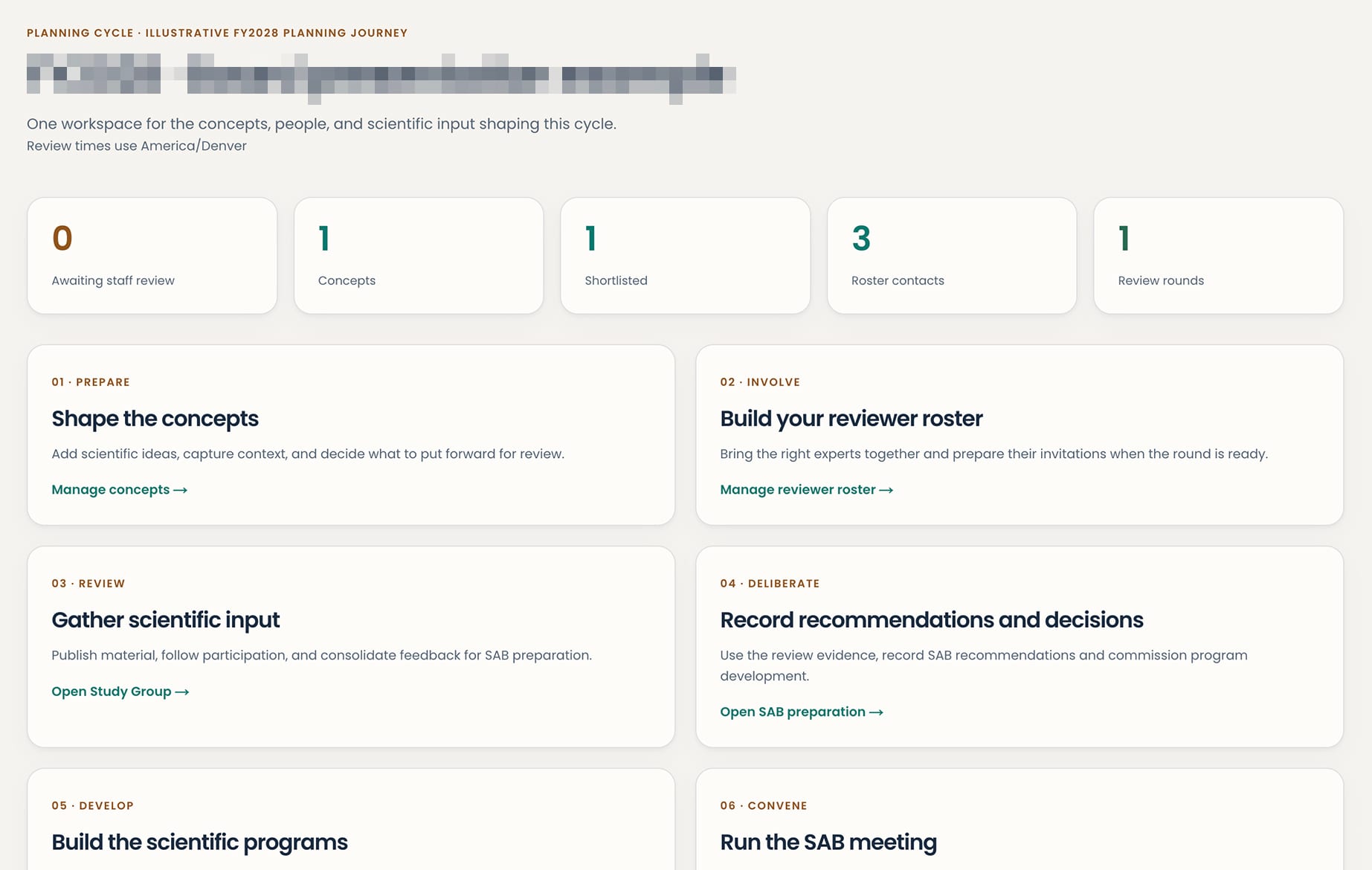
The staff workspaceA planning cycle connects concepts, people, review rounds, and the next stage of work. Fictional demonstration data.
From idea to program
3 connected stages
01
Shape the ideas
Community proposals, recurring topics, and staff knowledge become concepts with enough context for a useful scientific review.
Public proposal intake
Staff preparation and screening
Scientific categories
Previous meeting context
02
Gather judgment
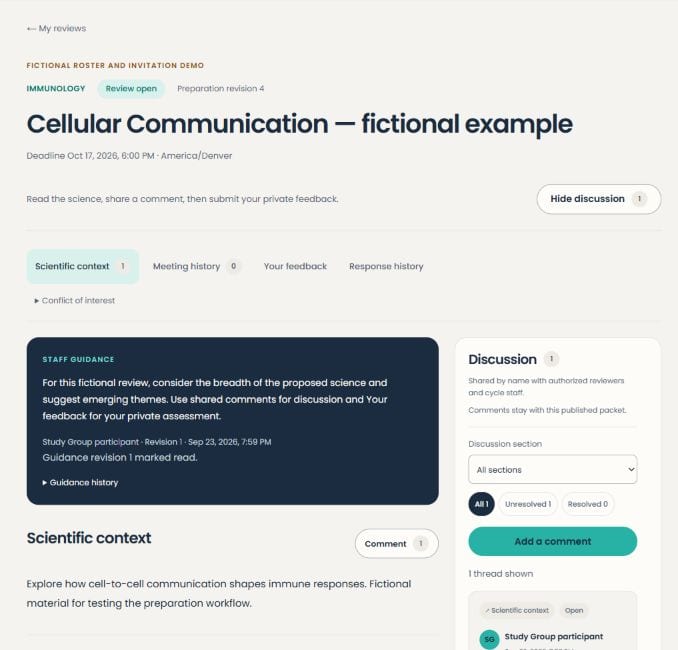
Experts review the science, share discussion, and submit private feedback. Staff follows coverage and prepares the evidence for advisory deliberation.
Reviewer workspace
Shared discussion and guidance
Saved and submitted feedback
Consolidated review results
03
Develop the program
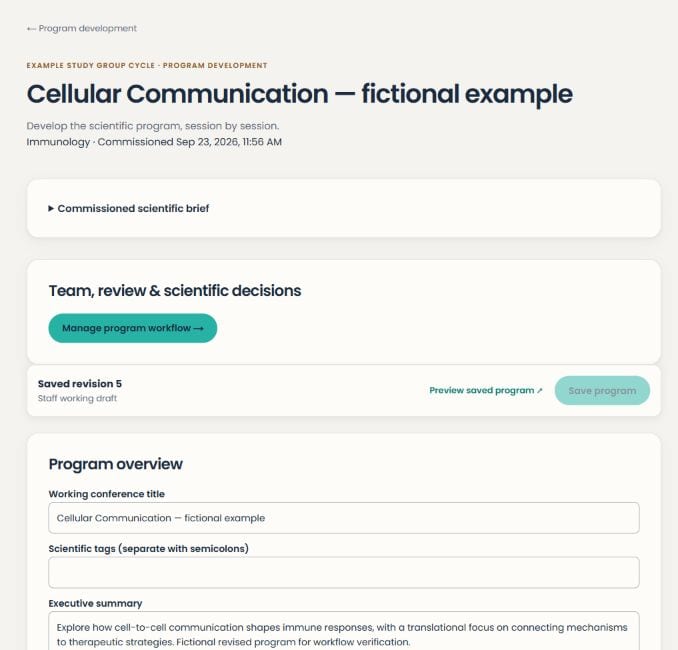
Staff decisions carry scientific direction into organizer briefs, detailed programs, advisory meetings, and required revisions.
Commissioning and organizer teams
Versioned program proposals
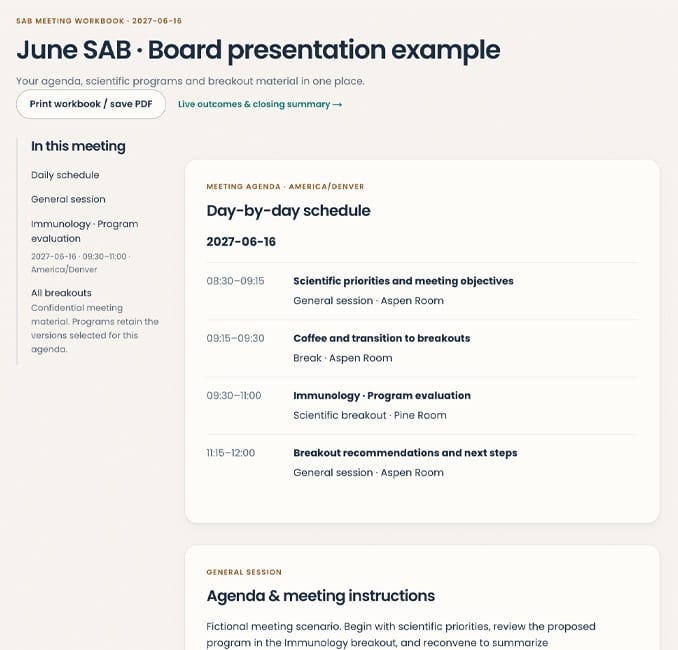
Meeting agendas and workbooks
Revisions and scientific approval
Scientific continuity
Concept
Study Group input
Advisory recommendation
Commissioning
Program development
Review and revision
The product decisions
The handoffs carry the meaning.
A conference begins with an idea and develops through many people’s judgment. Forms, surveys, email, spreadsheets, and meeting books each hold part of the story. Staff maintains continuity by knowing where to look and remembering how the pieces relate.
I translated those relationships into explicit workflows. A reviewer’s response, an advisory recommendation, and a staff decision carry different authority. The platform preserves each contribution and makes the next commitment visible.
The reviewer experienceScientific context, staff guidance, discussion, and private feedback stay together. Fictional example.Program developmentA commissioned brief develops into a detailed, versioned scientific program. Fictional example.
What the system preserves
4 design decisions
Scientific context
The rationale, feedback, and guidance travel with the idea into later stages.
Responsibility
Review input, advisory recommendations, appointments, and staff decisions have separate authority.
Version history
Submitted programs, closed results, and published meeting materials preserve the versions people used.
Access
Private drafts, structured feedback, discussion, and staff notes have explicit audiences.
Institutional memory
Make experience available.
Experienced colleagues bring years of context to planning: previous programs, organizers, speakers, attendance, and related scientific themes. The historical-program archive gives that knowledge a searchable place and lets selected editions accompany new review material.
Agendas and workbooks draw from the same scientific records. Submitted versions, closed results, and published meeting materials preserve what people actually used, so the reasoning remains available as the work moves forward.
The meeting workbookThe agenda, assigned scientific breakouts, and selected program versions form one meeting reference. Fictional example.
My contribution
From organizational knowledge to a working product.
Translated accumulated operational knowledge into the product model, scientific planning lifecycle, and connected staff experience.
Designed and developed concept intake, expert review, program development, and meeting preparation workflows.
Defined version history, explicit responsibilities, and access rules that preserve the meaning of scientific decisions.
Built illustrated documentation and fictional demonstration scenarios for evaluation and staff walkthroughs.